
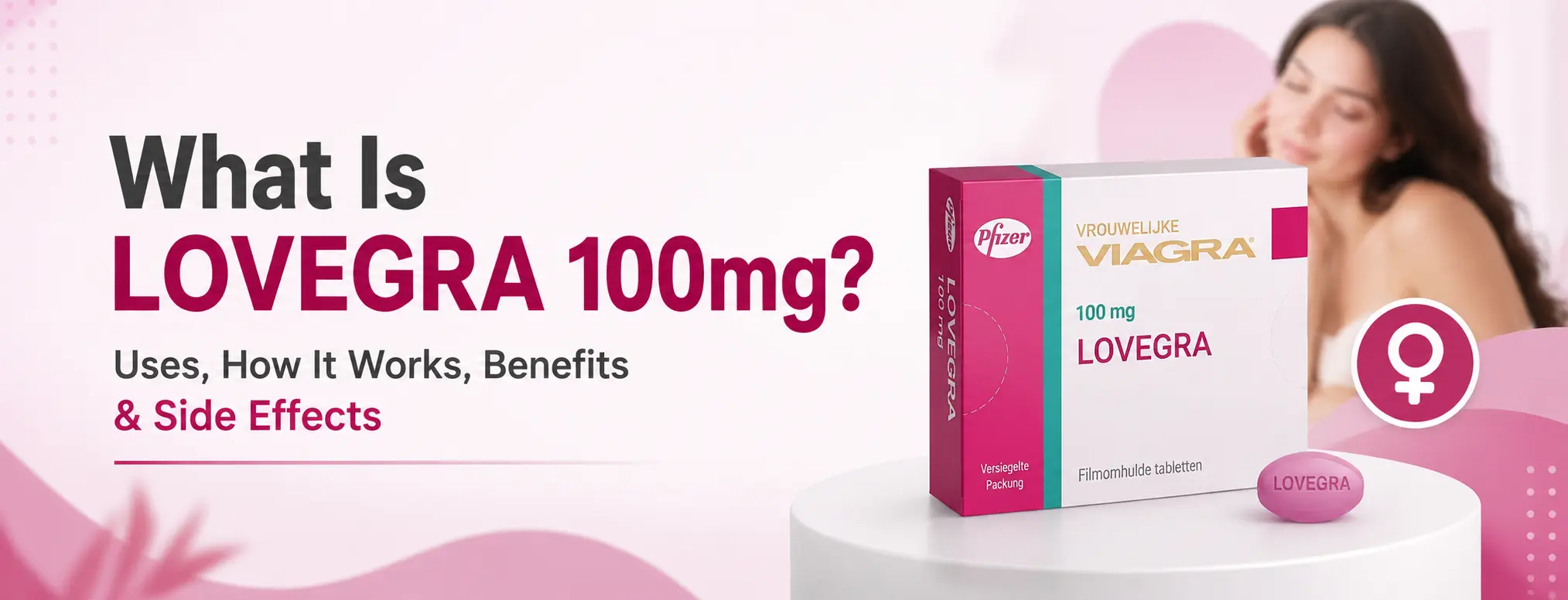
What Is Lovegra 100mg?
Lovegra 100mg is a Sildenafil Citrate-based medication developed for women experiencing difficulties with sexual arousal. It belongs to the same class of medicines as Sildenafil treatments used for erectile dysfunction in men, but its intended purpose is different. Rather than treating erectile dysfunction, Lovegra is marketed to support female sexual arousal by increasing blood flow to the genital area during sexual stimulation.
Interest in Lovegra has grown in recent years as more women look for ways to address concerns such as reduced arousal, decreased sensitivity, or difficulty becoming physically responsive during intimacy. While these symptoms are often grouped under female sexual dysfunction (FSD), the causes can vary considerably and may involve hormonal changes, stress, certain medical conditions, medications, or relationship factors.
Although Lovegra is widely discussed online, it’s important to understand that research into Sildenafil for women is more limited than it is for men with erectile dysfunction. This means results can differ from person to person, and the medication may not be appropriate for every woman.
This guide explains how Lovegra 100mg works, its potential uses, expected effects, possible side effects, and the factors to consider before deciding whether it may be a suitable option.
How Does Lovegra 100mg Work?
Lovegra 100mg contains Sildenafil Citrate, a phosphodiesterase type 5 (PDE5) inhibitor. This medicine works by relaxing blood vessels and increasing blood flow to certain areas of the body.
In men with erectile dysfunction, Sildenafil improves blood flow to the penis during sexual stimulation. In women, it has been studied for its potential to increase blood flow to the genital area, which may improve physical arousal and sensitivity in some individuals.
It’s important to note that Lovegra does not create sexual desire or emotional attraction. Sexual arousal involves a complex interaction of physical, hormonal, psychological, and relationship factors, and increasing blood flow addresses only one part of that process.
What Is Lovegra 100mg Used For?
Lovegra is marketed as a treatment intended to support female sexual arousal in women who experience reduced physical responsiveness during intimacy.
Some women report concerns such as:
- Reduced genital sensitivity.
- Difficulty becoming physically aroused.
- Decreased vaginal lubrication.
- Reduced satisfaction during intimacy.
These symptoms can have many possible causes, including hormonal changes, menopause, stress, anxiety, relationship difficulties, certain medications, or underlying medical conditions. Identifying the underlying cause is often an important part of finding the most appropriate treatment.
Does Lovegra Really Work?
The effectiveness of Lovegra varies between individuals. While Sildenafil has been extensively studied for erectile dysfunction in men, research involving women has produced mixed results. Some studies suggest that certain women—particularly those whose symptoms are related to reduced genital blood flow—may experience improvements in physical arousal. Other studies have found limited or no meaningful benefit.
Because female sexual dysfunction is influenced by many physical and psychological factors, no single medication works for everyone. Expectations should therefore remain realistic, and treatment decisions are best made with advice from a qualified healthcare professional.
How Long Does Lovegra Take to Work?
When Sildenafil is effective, its effects generally begin within 30 to 60 minutes after taking the medication.
The exact timing can vary depending on factors such as metabolism, whether it has been taken with food, alcohol consumption, and individual health. A large meal may delay absorption and slow the onset of effects.
How Long Do the Effects Last?
The effects of Sildenafil can remain active for several hours. During this period, increased blood flow may support physical responsiveness if sexual stimulation occurs. This does not mean the effects are continuous throughout the entire period, and individual experiences may differ depending on dosage, metabolism, and overall health.
Possible Side Effects of Lovegra
Like other medicines containing Sildenafil, Lovegra may cause side effects in some individuals. Commonly reported side effects include:
- Headache.
- Facial flushing.
- Nasal congestion.
- Dizziness.
- Indigestion.
- Mild visual disturbances.
Most side effects are temporary. Anyone who experiences severe or persistent symptoms should seek prompt medical attention.
Who Should Not Use Lovegra?
Lovegra may not be appropriate for everyone.
People with certain cardiovascular conditions, severe liver disease, low blood pressure, or those taking nitrate medicines should speak with a healthcare professional before using Sildenafil. Women who are pregnant or breastfeeding should also seek medical advice before considering any medication for sexual health concerns.
A healthcare professional can help determine whether symptoms are related to an underlying medical condition and discuss appropriate treatment options.
Lifestyle Factors That Can Influence Sexual Wellbeing
Medication is only one aspect of sexual health. Regular exercise, adequate sleep, stress management, open communication with a partner, limiting alcohol, and maintaining overall physical and mental wellbeing may all contribute to improved sexual function. For some women, addressing these factors can be as important as medical treatment.
Final Thoughts
Lovegra 100mg is a Sildenafil-based medication that has been marketed to support female sexual arousal by improving blood flow to the genital area. While some women may experience benefits, current scientific evidence is less established than it is for Sildenafil use in men with erectile dysfunction.
Female sexual dysfunction often has multiple contributing factors, so treatment should be guided by an understanding of the individual’s symptoms, medical history, and overall health. Speaking with a qualified healthcare professional is the best way to determine whether Sildenafil or another approach is appropriate.
Frequently Asked Questions (FAQs)
Lovegra 100mg is a medication that contains Sildenafil Citrate. It has been marketed for women with concerns related to sexual arousal, although scientific evidence for its effectiveness in women is more limited than it is for men with erectile dysfunction.
Lovegra works by increasing blood flow through inhibition of the PDE5 enzyme. In women, it has been studied for its potential to improve blood flow to the genital area during sexual stimulation, although responses vary between individuals.
Lovegra is marketed to support female sexual arousal in women who experience reduced physical responsiveness during intimacy. Female sexual difficulties can have many different causes, so identifying the underlying reason is important before considering treatment.
No. Lovegra is not designed to increase libido or sexual desire. Sexual desire is influenced by hormonal, emotional, psychological, and relationship factors. Sildenafil primarily affects blood flow rather than desire itself.
When effective, Lovegra generally begins working within approximately 30 to 60 minutes. The exact timing may vary depending on metabolism, food intake, alcohol consumption, and individual health.
The effects of Sildenafil may last for several hours. However, this does not mean continuous physical arousal. Instead, the medication may increase responsiveness to sexual stimulation during that period.
Yes. A heavy or high-fat meal may slow the absorption of Sildenafil, which can delay the onset of its effects.
Common side effects may include headache, facial flushing, dizziness, nasal congestion, indigestion, and mild visual changes. These side effects are usually temporary, but medical advice should be sought if severe or persistent symptoms occur.
No. Lovegra may not be appropriate for individuals with certain heart conditions, severe liver disease, low blood pressure, or those taking nitrate medications. A healthcare professional can advise whether Sildenafil is suitable based on your medical history.
Whether Lovegra can be used regularly depends on individual circumstances and medical advice. It should only be used according to professional guidance and the product’s instructions.
No. Female sexual dysfunction is complex and can be influenced by physical health, hormones, mental wellbeing, medications, and relationship factors. Because of this, individual responses to Lovegra can vary, and it may not be effective for everyone.
Yes. Depending on the underlying cause of symptoms, healthcare professionals may recommend lifestyle changes, counselling, pelvic floor therapy, hormone-based treatments where appropriate, or other evidence-based approaches. The most suitable option depends on the individual’s health and diagnosis.
Medical Disclaimer
Author: George William
Medically Reviewed By: Dr. Daniel Roberts – Medical Advisor
Last Review Date: June 2026
Next Review Date: June 2027
This article is for informational purposes only and does not replace professional medical advice, diagnosis, or treatment. Always consult a qualified healthcare professional before using erectile dysfunction medication or changing your healthcare routine.